How to Choose the Right Workshop Crane: Span Guide
menu_open
Content Quick Link
Learn how to select the right crane by matching crane span to lifting needs. Compare overhead, semi-gantry, gantry, and freestanding cranes for your workshop.
How to Choose the Right Crane for Your Workshop: Understanding Workshop Span vs. Crane Span
Introduction: Why Workshop Span vs. Crane Span Matters
When you’re looking to buy a crane for your workshop, the first thing many buyers get confused about is the span. People often think the crane span must equalor similiar to the full width of the workshop. That’s not always true. The span your crane needs really depends on where you need to lift and move materials.
Getting this right can save you a lot of money, reduce unnecessary load on your workshop structure, and make operations smoother. You don’t want to end up with a crane that’s too big, taking up extra space and costing more than you need. On the other hand, a crane that’s too small won’t reach the areas you need and will slow down production.
Key Points to Keep in Mind
- Workshop span = total width of the building or area from wall to wall.
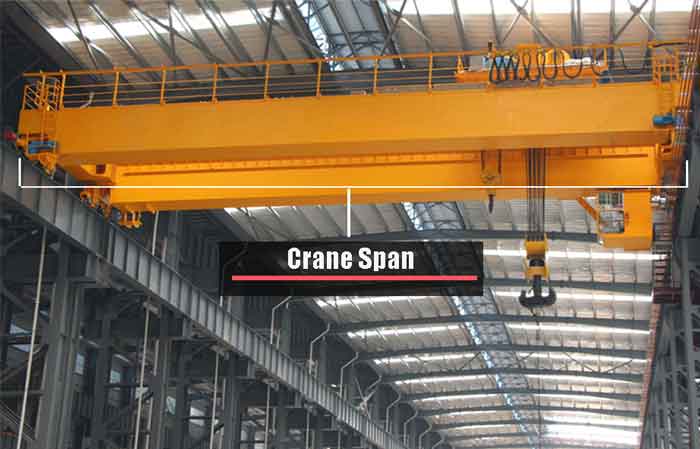
- Crane span = the distance the crane bridge covers between runways or supports.
- Not always the same: Your crane only needs to cover the area where lifting actually happens.
Why This Matters for Buyers
- Cost control: Larger spans require stronger girders, more steel, and heavier hoists. A smaller span can reduce cost significantly.
- Space efficiency: Oversized cranes can block lighting, ventilation, or even access paths.
- Operational flexibility: Correct span ensures the crane can reach all points where you need to lift without wasting movement.
Practical Tip for Workshop Planning
- Walk through your workshop and mark all areas where materials will be lifted or moved.
- Decide if you need full-span coverage or only specific zones.
- Consider future changes—if you expect workflow adjustments, a slightly wider span may help, but avoid going unnecessarily large.
Workshop Span vs. Crane Span
Understanding the difference between workshop span and crane span helps buyers choose the right crane without overspending or overcomplicating layout.
What is Workshop Span?
The workshop span is simply the total width of your building or the area between the walls. Think of it as the full distance across the space where you could, in theory, install a crane. This is a fixed measurement and usually determines the maximum possible crane span—but it doesn't always mean your crane has to reach the full width.
Key points:
- Measured from wall to wall or runway to runway.
- Defines the maximum potential coverage for cranes.
- Important for structural planning, especially for double girder cranes.
What is Crane Span?
The crane span is the distance the crane's bridge actually covers between its supports or runway rails. This is the real "reach" of the crane and is based on where lifting and material handling are needed.
Key points:
- Determines the actual coverage area of your crane.
- Can be full workshop span or just a portion depending on your workflow.
- Smaller spans reduce cost and structural load, while larger spans allow full coverage.
Key Takeaway for Buyers
- Your crane does not always need to match the full workshop span.
- Focus on material handling zones—the areas where loads will actually be lifted and moved.
- Oversizing the span wastes money and may make installation more complex.
Practical Tips
- Walk through your workshop and mark all lifting points.
- Identify if one crane can cover the entire area or if multiple smaller cranes are more efficient.
- Consider load weight, lifting frequency, and future expansion when deciding crane span.
How to Decide How Much of the Workshop to Cover
Once you understand the difference between workshop span and crane span, the next step is figuring out how much of your workshop actually needs crane coverage. Not every corner of the workshop requires a crane, and choosing the right coverage can save money and improve efficiency.
Step 1: Draw a Lifting Map
Start by making a simple sketch of your workshop. Mark all areas where materials will be lifted, moved, or stored. This doesn't have to be complicated—just show workflow paths, storage locations, and loading/unloading points.
Why this helps:
- Clearly identifies areas that need crane access.
- Helps avoid unnecessary coverage in zones where the crane isn't needed.
- Makes it easier to decide the span and type of crane.
Step 2: Decide on Full Coverage vs. Zone Coverage
- Full coverage: The crane can reach every point in the workshop. Needed if you handle heavy loads across the entire area.
- Zone coverage: The crane only serves specific areas where lifting happens. Ideal if your workshop has dedicated production lines or storage areas.
Quick tip: Zone coverage often costs less because the crane span is shorter, requires less steel, and may allow a single-leg semi-gantry or freestanding crane instead of a full overhead crane.
Step 3: Consider Load Weight, Lifting Height, and Frequency
- Load weight: Heavier loads may require double girder cranes or reinforced structures even if the span is short.
- Lifting height: Taller lifts require careful planning of hoist height and hook travel.
- Frequency of use: High-frequency operations may need faster hoists, smoother controls, or multiple cranes for efficiency.
Practical buyer insight:
- Even if the crane only covers a small zone, make sure it can handle peak loads and frequent lifts safely.
- Plan for future growth—you don't want to replace or modify a crane too soon.
Step 4: Check for Obstacles and Floor Space
- Identify columns, walls, or machinery that might block crane movement.
- Make sure your selected span allows the crane to move freely without hitting anything.
Types of Cranes and When to Use Them
Choosing the right crane type depends on how much of your workshop you need to cover, load weight, and lifting frequency. Here's a breakdown of the main options for workshop material handling:
Overhead Bridge Cranes (Single or Double Girder)
Overhead bridge cranes are the most common choice for workshops where full coverage is required. They travel along runway beams installed on both sides of the workshop and can reach most areas without moving anything on the floor.
Key points:
- Single girder: Suitable for lighter loads and shorter spans. More cost-effective and easier to install.
- Double girder: Designed for heavy loads, long spans, and high lifting heights. Provides more stability and less deflection.
- Best for: Workshops where materials need to be moved across the full width or length.
Practical tips:
- For workshops wider than 20 meters or handling loads over 10 tons, a double girder overhead crane is usually the safer choice.
- Make sure the runway beams are properly aligned to avoid uneven movement or extra wear on the hoist.
Semi-Gantry Cranes
Semi-gantry cranes are a hybrid option. One side of the crane runs on a runway, while the other side is supported by a floor leg. This design is ideal for workshops where full overhead coverage isn't necessary.
Key points:
- Covers specific zones rather than the entire workshop.
- Less expensive to install compared to full overhead cranes.
- Can handle moderate loads and medium spans efficiently.
Practical tips:
- Great for lifting along a production line, a storage area, or near heavy machinery.
- If your workflow changes, semi-gantry cranes are often easier to relocate or adjust than full overhead cranes.
Full Gantry Cranes
Full gantry cranes are supported on the floor at both ends instead of relying on runway beams. This makes them a flexible solution for workshops or outdoor areas where installing overhead runways is difficult or impossible.
Key points:
- Floor-supported on both sides, so no overhead runway beams are needed.
- Can be used indoors or outdoors, depending on the design.
- Ideal for wide spans where a fixed overhead system would be costly or impractical.
Practical tips:
- Consider floor strength—the legs need to support the full crane load plus any dynamic forces.
- Great for workshops with open areas, temporary lifting needs, or high ceilings.
- Can also serve as a mobile crane if designed with wheels on rails.
Freestanding Bridge Cranes / Portal Cranes
Freestanding overhead cranes or portal cranes are small, modular cranes designed for specific lifting spots. They don't require permanent runways and can be relocated as needed.
Key points:
- Perfect for targeted lifting areas, such as a single workstation, machine, or storage zone.
- Easy to move and modular, so they can adapt if your workflow changes.
- Usually used for light to medium loads.
Practical tips:
- Best for workshops where floor space is available and only certain zones need crane coverage.
- Can be a cost-effective solution for small-scale lifting without the expense of full overhead installation.
- Make sure the base or floor is level and strong enough to support the crane safely.
Buyer Takeaway
- Full coverage → overhead bridge crane (single or double girder).
- Partial coverage or zone lifting → semi-gantry or freestanding cranes.
- Flexible or outdoor spans → full gantry crane.
- Always match crane type to actual lifting needs, not just the workshop size.
Practical Tips for Buyers
Selecting the right crane is more than just picking a type. It's about matching the crane to your workshop, workflow, and future needs. These practical tips will help you make a decision that saves money, space, and effort.
Match Crane Span to Actual Lifting Needs
Not every part of your workshop needs a crane. Oversizing the span can increase costs and create unnecessary obstacles. Focus on the areas where materials are actually lifted and moved.
- Only make your crane as wide as needed; full workshop coverage isn't always necessary.
- Map out lifting zones first to determine the exact span required.
- Avoid blocking lighting, ventilation, or access paths with oversized cranes.
Consider Load Weight and Crane Type
The type of crane you choose should reflect the weight and size of your loads. Using the right crane ensures stability, safety, and efficient operation.
- For heavy or large loads, double girder or full gantry cranes are safer.
- Lighter loads can be handled by single girder, semi-gantry, or freestanding cranes.
- Check the crane's duty class to ensure it can handle frequent or demanding lifting tasks.
Plan for Floor Space, Installation, and Maintenance
A crane isn't just about lifting—it affects your workshop layout and operations. Think about how it fits in your space and how easy it will be to maintain.
- Ensure the crane doesn't interfere with walkways, workstations, or equipment.
- Confirm that the floor can support floor-supported cranes, like gantry or semi-gantry types.
- Plan for easy access for inspections, maintenance, and repairs to avoid downtime.
Consider Future Lifting Needs
Your workflow may change over time. Planning for future requirements can save money and prevent early replacements.
- Anticipate heavier loads, expanded production lines, or new lifting zones.
- Slightly larger spans or higher capacity cranes now may save costly upgrades later.
- Factor in flexibility for reconfiguring the crane if workflows change.
Buyer Takeaway
- Match crane span to actual lifting needs, not the full workshop width.
- Select the crane type based on load, span, and coverage requirements.
- Consider installation, maintenance, and future growth to make a practical, cost-effective decision.
Quick Examples: Choosing the Right Crane for Your Workshop
Sometimes it's easier to understand crane selection with real-world scenarios. Here are a few common workshop situations and which crane type fits best:
Scenario A: Full Workshop Coverage for Heavy Loads
If your workshop is wide and you need to lift heavy materials across the entire area, full-span coverage is necessary.
- Workshop size: 30 meters wide
- Material: Heavy steel plates
- Recommended crane: Double girder overhead crane spanning the full 30 meters
- Why: Provides maximum coverage, stability, and safety for heavy loads
Scenario B: Partial Coverage for Specific Zones
Not every part of a workshop needs crane access. If lifting is concentrated in one area, a smaller, zone-specific crane is more practical.
- Workshop size: 30 meters wide
- Material handling zone: 15 meters along a production line
- Recommended crane: Semi-gantry crane spanning 15 meters
- Why: Cost-effective, flexible, and efficient for targeted lifting without covering the whole workshop
Scenario C: Outdoor or Flexible Lifting Area
For loading or unloading outside the workshop or in areas without overhead runways, a floor-supported crane is ideal.
- Location: Outdoor loading/unloading zone
- Recommended crane: Full gantry crane spanning the required area
- Why: Supports large spans without runway beams, flexible placement, and can handle heavy or irregular loads
Buyer Takeaway
- Match crane type and span to actual lifting requirements, not the full workshop width.
- Use double girder cranes for heavy, full-span lifting.
- Use semi-gantry or gantry cranes for zone-specific or flexible lifting needs.
- This approach saves cost, space, and installation complexity while ensuring safe operation.
Overhead Crane for Large-Span Workshop: FAQ for Buyers
Q1: What are the workshop dimensions and coverage needs?
A: Suppliers need to know your workshop width (span), length, and whether you need full coverage or just specific lifting zones.
Answer for Reference:
- Workshop width: 30 meters
- Workshop length: 60 meters
- Coverage needed: Two production lines, not the entire workshop
Tip: Identify any obstacles like columns, mezzanines, or machinery that might block crane movement.
Q2: What are the lifting requirements?
A: Provide details about the maximum load, lifting height, and frequency of lifts.
Answer for Reference:
- Max load: 15 tons
- Lifting height: 8 meters
- Frequency: 20–30 lifts per hour, 8 hours daily
- Load type: Steel plates in bundles; occasional long pipes
Tip: Always include unusual or irregular loads, as they affect hoist type and crane design.
Q3: What crane span and travel distance are needed?
A: Define the crane span (distance between supports) and the travel distance along the workshop.
Answer for Reference:
- Span: 20 meters along production line
- Travel distance: 50 meters
- Preference: Two semi-gantry cranes for separate lines
Tip: Multiple smaller cranes can be more efficient than one oversized crane.
Q4: Are there any structural or floor constraints?
A: Suppliers need to know whether you have runway beams or if the crane will be floor-supported.
Answer for Reference:
- No runways; floor-supported semi-gantry cranes preferred
- Floor: Concrete, 30 MPa strength
Tip: Check that the floor can safely handle crane loads and dynamic movement.
Q5: What are the electrical requirements?
A: Specify voltage, phase, and any special electrical conditions.
Answer for Reference:
- Voltage: 400 V, 3-phase, 50 Hz
- Environment: Indoor, no explosion-proof required
Tip: Electrical specs affect motor selection, hoist type, and control systems.
Q6: What are the environmental or operational conditions?
A: Mention whether the crane will be indoors or outdoors, and any temperature, humidity, or dust concerns.
Answer for Reference:
- Indoor workshop, normal temperature and humidity
- Standard paint coating is sufficient
Tip: For outdoor or corrosive environments, additional coatings or protective features may be needed.
Q7: What safety and compliance features are required?
A: Specify any standards, overload protection, limit switches, or emergency stops needed.
Answer for Reference:
- Compliance: ISO 4301 and local safety regulations
- Safety features: Overload protection, limit switches, emergency stop buttons
Tip: Safety features are essential and often legally required.
Q8: Are there future lifting or workflow considerations?
A: Let suppliers know if your lifting needs might change or expand.
Answer for Reference:
- Future expansion possible with heavier loads
- Crane should allow for upgrades to higher capacity
Tip: Future-proofing saves costs and avoids early replacement or redesign.
Buyer Takeaways
- Map your workshop layout and lifting zones
- Define load weight, lifting height, and frequency
- Specify crane span, travel distance, and structural/floor conditions
- Include electrical, environmental, and safety requirements
- Mention future workflow changes
Providing complete information upfront helps suppliers give accurate quotes, suitable crane options, and faster delivery, reducing costly mistakes.

Article by Bella ,who has been in the hoist and crane field since 2016. Bella provides overhead crane & gantry crane consultation services for clients who need a customized overhead travelling crane solution.Contact her to get free consultation.